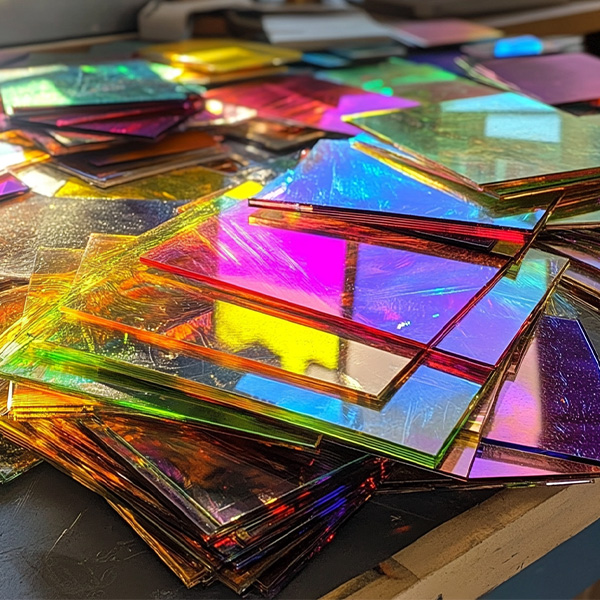
Step 1:
Selecting the Glass
Each piece begins with selecting high-quality glass sheets. The colors, patterns, and transparency of the glass are carefully chosen to create the desired effect.
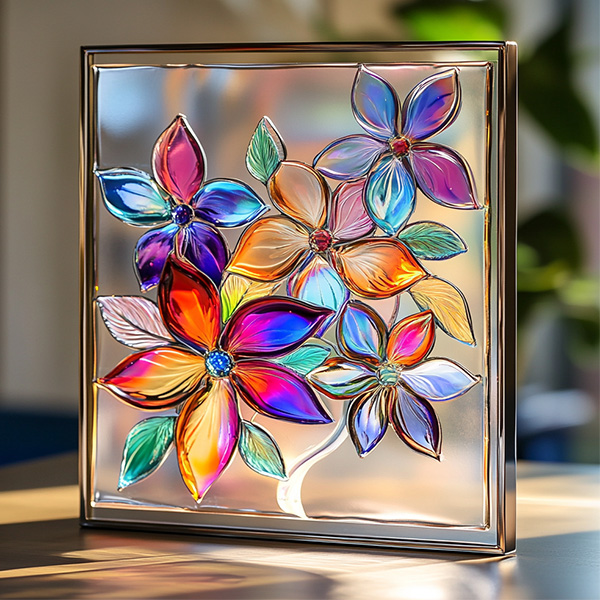
Dichroic glass is renowned for its vibrant colors and shimmering effects, which change depending on the angle of light.
The beauty and versatility of dichroic glass as a unique creative material plays a fascinating role in art and design. It’s a material that brings unique depth and brilliance to any piece of art, making each creation one-of-a-kind.
Dichroic glass is a special type of glass that displays two different colors by undergoing changes in light. This is achieved through a process of layering glass with metallic oxides, creating an iridescent effect that can change based on the viewing angle and light source.
The process of making dichroic glass involves several steps:
Dichroic glass is used in a variety of applications, including:
Each piece begins with selecting high-quality glass sheets. The colors, patterns, and transparency of the glass are carefully chosen to create the desired effect.
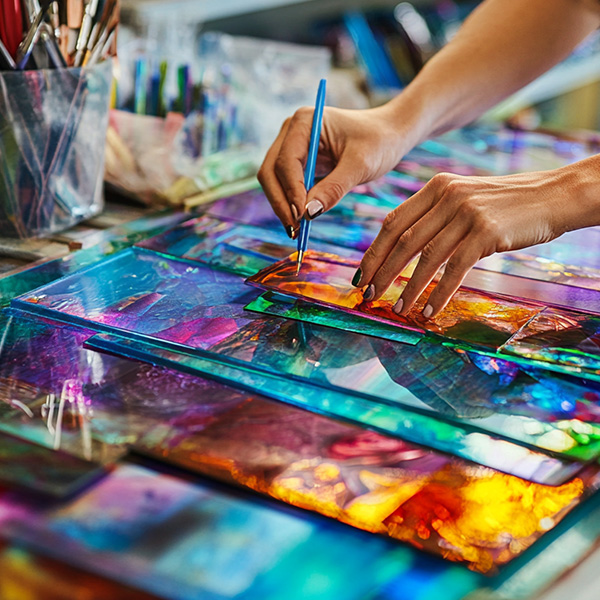
After selection, the glass is meticulously cut into shapes. This step requires precision, as each cut determines the flow of the final piece.
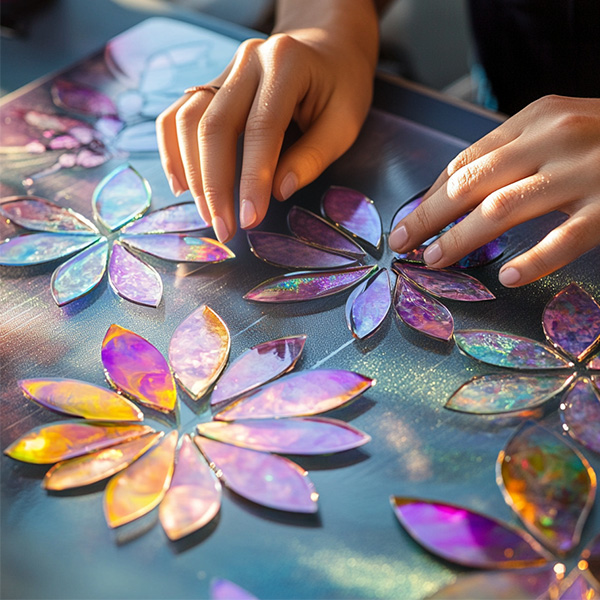
The cut glass pieces are arranged into a design, layering colors and shapes to build depth and texture. Each composition is unique.
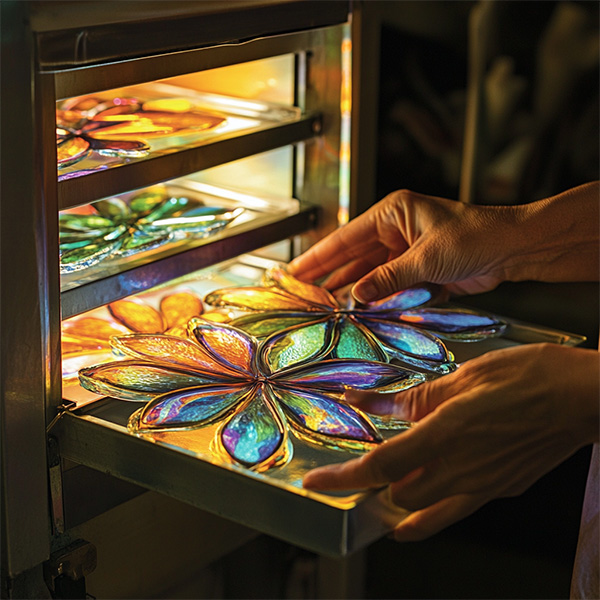
The arranged glass is then placed in a kiln, where it's heated to high temperatures, fusing the layers into a single solid piece. This process can take hours or even days.
After cooling, the fused glass is cleaned and polished. Sometimes additional elements like painting or etching are added for extra detail.